
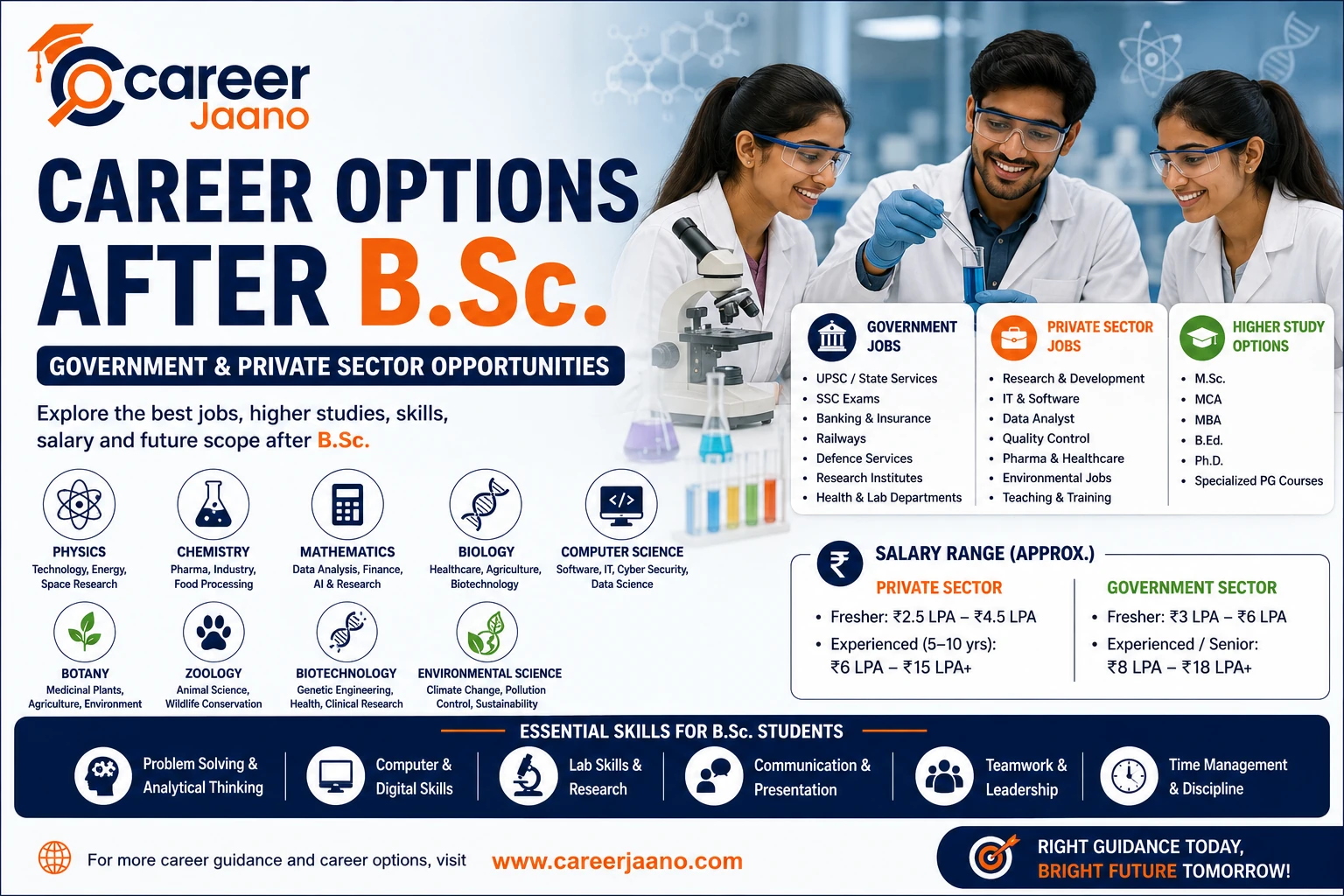
A Bachelor of Science (B.Sc.) is a three-year undergraduate degree that gives students a strong foundation in science, logic, research and analytical thinking.
Students can study subjects such as:
Physics
Chemistry
Mathematics
Biology
Computer Science
Statistics
Environmental Science
Biotechnology
Botany
Zoology
These subjects are directly connected with many real-world industries.
For example:
Physics is useful in technology, electronics, energy and space research.
Chemistry is important in pharmaceuticals, food processing and manufacturing.
Biology is useful in healthcare, agriculture and biotechnology.
Mathematics and Statistics are widely used in data analysis, finance and research.
Computer Science is connected with software, IT, cybersecurity and data science.
Students who choose B.Sc. Honours usually study one subject in greater depth and build stronger subject knowledge for research, higher education and specialised jobs.
Popular B.Sc. Specialisations and Their Career Uses
B.Sc. Physics
Physics is useful in areas such as:
Electronics
Energy
Space research
Technical laboratories
Scientific research
B.Sc. Chemistry
Chemistry graduates can explore:
Pharmaceutical companies
Chemical industries
Quality control
Food testing
Environmental laboratories
B.Sc. Mathematics
Mathematics is useful in:
Data analysis
Finance
Actuarial work
Artificial Intelligence
Research
Statistics
B.Sc. Biology
Biology graduates may explore:
Healthcare support
Biotechnology
Medical research
Agriculture
Life sciences
B.Sc. Botany
Botany can lead to areas such as:
Plant research
Agriculture
Environmental conservation
Medicinal plants
Forestry-related research
B.Sc. Zoology
Zoology students may work in:
Wildlife research
Animal science
Environmental projects
Conservation
Research laboratories
B.Sc. Computer Science
Computer Science graduates can build careers in:
Software development
Web development
IT support
Data analysis
Cybersecurity
Software testing
B.Sc. Biotechnology
Biotechnology is connected with:
Genetic research
Healthcare
Clinical research
Agriculture
Pharmaceuticals
Life sciences
B.Sc. Environmental Science
Environmental Science students may work in:
Pollution control
Sustainability
Climate research
Environmental consulting
Waste management
Importance of Industry Skills After B.Sc.
A B.Sc. degree gives students strong academic knowledge, but practical and technical skills are equally important.
Companies usually prefer candidates who can apply their knowledge in real work situations.
Useful skills include:
Problem-solving
Analytical thinking
Computer knowledge
Programming
Data analysis
Laboratory skills
Research methodology
Communication
Presentation
Teamwork
Time management
Students can improve these skills through internships, online courses, projects and practical training.
Private Sector Career Options After B.Sc.
B.Sc. graduates can work in many private-sector industries.
The available career path mainly depends on the student’s specialisation and additional skills.
Science and Research Roles
Possible jobs include:
Lab Assistant
Research Assistant
Research Associate
Quality Control Analyst
Laboratory Executive
Pharmaceutical Sales Representative
IT and Computer Science Roles
Students with Computer Science, Mathematics or Statistics backgrounds may explore:
Data Analyst
Software Testing Assistant
IT Support Executive
Network Support Assistant
Web Developer Trainee
Technical Support Executive
Learning programming languages such as Python, SQL, Java or other relevant tools can improve career opportunities.
Mathematics and Statistics Roles
Possible job profiles include:
Data Analyst
Actuarial Assistant
Risk Analyst
MIS Executive
Market Research Analyst
Data Processing Executive
Pharmaceutical and Healthcare Industry
Students from Chemistry, Biology, Biotechnology or Life Science backgrounds may explore:
Quality Control Assistant
Lab Executive
Clinical Research Assistant
Medical Coding roles
Pharmaceutical Sales
Research support roles
The exact qualification requirement may vary for each role.
Environmental and Sustainability Careers
Environmental Science graduates may find opportunities in:
Environmental consulting
Sustainability projects
Pollution monitoring
Waste management
Environmental research
General Private-Sector Jobs
B.Sc. graduates can also apply for many graduate-level jobs that do not require a specific science specialisation.
These may include:
Digital Marketing Trainee
Customer Service Executive
HR Assistant
Administrative Assistant
Business Development Executive
Operations Executive
Education Counsellor
Subject Matter Expert
Salary After B.Sc. in the Private Sector
Salary depends on:
Specialisation
Skills
Job role
Company
Location
Experience
Additional certifications
Fresh graduates usually begin with entry-level packages.
Candidates with strong technical skills in areas such as data analysis, programming, research, laboratory technology or specialised scientific work may get better opportunities.
With experience and additional qualifications, salary can grow significantly.
Government Jobs After B.Sc.
B.Sc. graduates can also apply for a wide range of government jobs.
Depending on the recruitment rules, they may be eligible for opportunities in:
Banking
SSC
UPSC
State government departments
Railways
Defence
Research organisations
Health departments
Scientific institutions
Banking and Insurance Jobs
B.Sc. graduates can apply for many graduate-level banking examinations.
Possible roles include:
Probationary Officer
Clerk
Office Assistant
Assistant
Administrative roles
UPSC and State Civil Services
B.Sc. graduates can appear for the UPSC Civil Services Examination and eligible state-level civil services examinations.
Possible services include:
IAS
IPS
IRS
Other central and state services
Eligibility depends on the latest official recruitment rules.
SSC Jobs
B.Sc. graduates may be eligible for different SSC posts such as:
Assistant
Tax Assistant
Statistical roles
Scientific Assistant
Auditor
Accountant
Some specialist posts may require specific subjects such as Mathematics, Statistics or Science.
Scientific and Research Organisations
Science graduates may also find opportunities in government research institutions.
Depending on their qualification and specialisation, they can explore roles in areas such as:
Scientific research
Laboratories
Technical support
Data analysis
Environmental research
Space and defence research
Higher qualifications such as M.Sc. may be required for many research positions.
Indian Railways
B.Sc. graduates may apply for eligible graduate-level and technical posts in Indian Railways.
Opportunities depend on the recruitment notification and required qualification.
Defence Services
B.Sc. graduates may explore suitable officer-level or technical opportunities through eligible entry routes.
Possible areas may include:
Administration
Logistics
Education
Technical support
Scientific roles
Territorial Army
The exact eligibility varies by branch and recruitment process.
Health and Laboratory Departments
Science graduates may also explore jobs in:
Government laboratories
Research centres
Public health projects
Healthcare support services
Some technical roles may require specific professional qualifications or certifications.
Best Higher Study Options After B.Sc.
Higher education can help students gain specialisation and access better career opportunities.
| Course | Career Benefit |
|---|---|
| M.Sc. | Advanced study, research and specialised science careers |
| MCA | Computer applications, software and IT careers |
| MBA | Management and corporate leadership roles |
| B.Ed. | Teaching careers |
| Ph.D. | Research and university-level academic careers |
| Specialised PG Courses | Data science, biotechnology, analytics and other professional fields |
M.Sc.
M.Sc. is one of the most common options after B.Sc.
Students can specialise in areas such as:
Physics
Chemistry
Mathematics
Zoology
Botany
Biotechnology
Environmental Science
Statistics
Computer Science
It is useful for research, teaching and specialised technical careers.
MCA
Students interested in IT and software careers can consider MCA, subject to the eligibility criteria of the institution.
It can help build careers in:
Software development
Data systems
IT
Web technologies
Application development
MBA
B.Sc. graduates can also pursue an MBA.
Popular specialisations include:
Business Analytics
Marketing
Human Resources
Finance
Operations
Healthcare Management
B.Ed.
Students who want to become teachers can explore B.Ed. after meeting the required eligibility conditions.
Ph.D.
Students interested in advanced research and academics can pursue a Ph.D. after completing the required postgraduate qualification.
Other Professional Courses
Depending on their interests, B.Sc. students can also explore:
Data Science
Artificial Intelligence
Clinical Research
Bioinformatics
Environmental Management
GIS
Cybersecurity
Actuarial Science
Which Career is Best After B.Sc.?
There is no single best career for every B.Sc. graduate.
The right choice depends on your:
Specialisation
Skills
Interests
Career goals
Higher education plans
For example:
If you like research, M.Sc. and research careers may suit you.
If you enjoy technology, IT, data science or programming may be a good option.
If you want a government job, you can prepare for UPSC, SSC, banking or other competitive exams.
If you enjoy teaching, higher studies and B.Ed. can be useful.
If you want management roles, MBA can open a different career path.
Future Scope After B.Sc.
The future scope of B.Sc. is strong because science graduates can move into both traditional and emerging industries.
Some fast-growing areas include:
Data Science
Artificial Intelligence
Biotechnology
Environmental Science
Renewable Energy
Cybersecurity
Healthcare Research
Climate Science
Scientific Computing
Students who combine science knowledge with modern technical skills may have wider career opportunities in the future.
Conclusion
B.Sc. is more than just a science degree. It gives students a strong foundation in scientific thinking, research, analysis and problem-solving.
Graduates can explore careers in the private sector, government organisations, research institutions, technology companies, education and higher studies.
The key to building a successful career after B.Sc. is to combine academic knowledge with practical skills and choose a career path that matches your interests.
Before making a final career decision, guidance from a qualified career counsellor can also help you understand your strengths and select the right direction.
For more career options and career guidance, visit Career Jaano.
Frequently Asked Questions (FAQs)
1. What are the best career options after B.Sc.?
Popular options include research, data analysis, IT, laboratory jobs, pharmaceutical careers, government jobs, teaching and higher studies such as M.Sc., MCA or MBA.
2. Can I get a government job after B.Sc.?
Yes. B.Sc. graduates can apply for many government exams and jobs through UPSC, SSC, banking, railways, state government departments and research organisations.
3. Which course is best after B.Sc.?
M.Sc. is a strong option for students who want to continue in science. MCA, MBA, B.Ed. and specialised courses in Data Science, AI or Biotechnology are also popular choices.
4. Can I go into IT after B.Sc.?
Yes. Students with Computer Science, Mathematics, Statistics or strong programming skills can explore careers in IT, software, data analysis and technical support.
5. Is B.Sc. good for government exams?
Yes. A recognised B.Sc. degree makes students eligible for many graduate-level government examinations, depending on the specific recruitment rules.
6. What skills should B.Sc. students learn for better jobs?
Useful skills include data analysis, programming, laboratory techniques, research methodology, MS Excel, communication and problem-solving.
7. Is B.Sc. enough to get a good job?
B.Sc. can help you get entry-level opportunities, but practical skills, internships, certifications and higher education can significantly improve your job prospects and salary.