
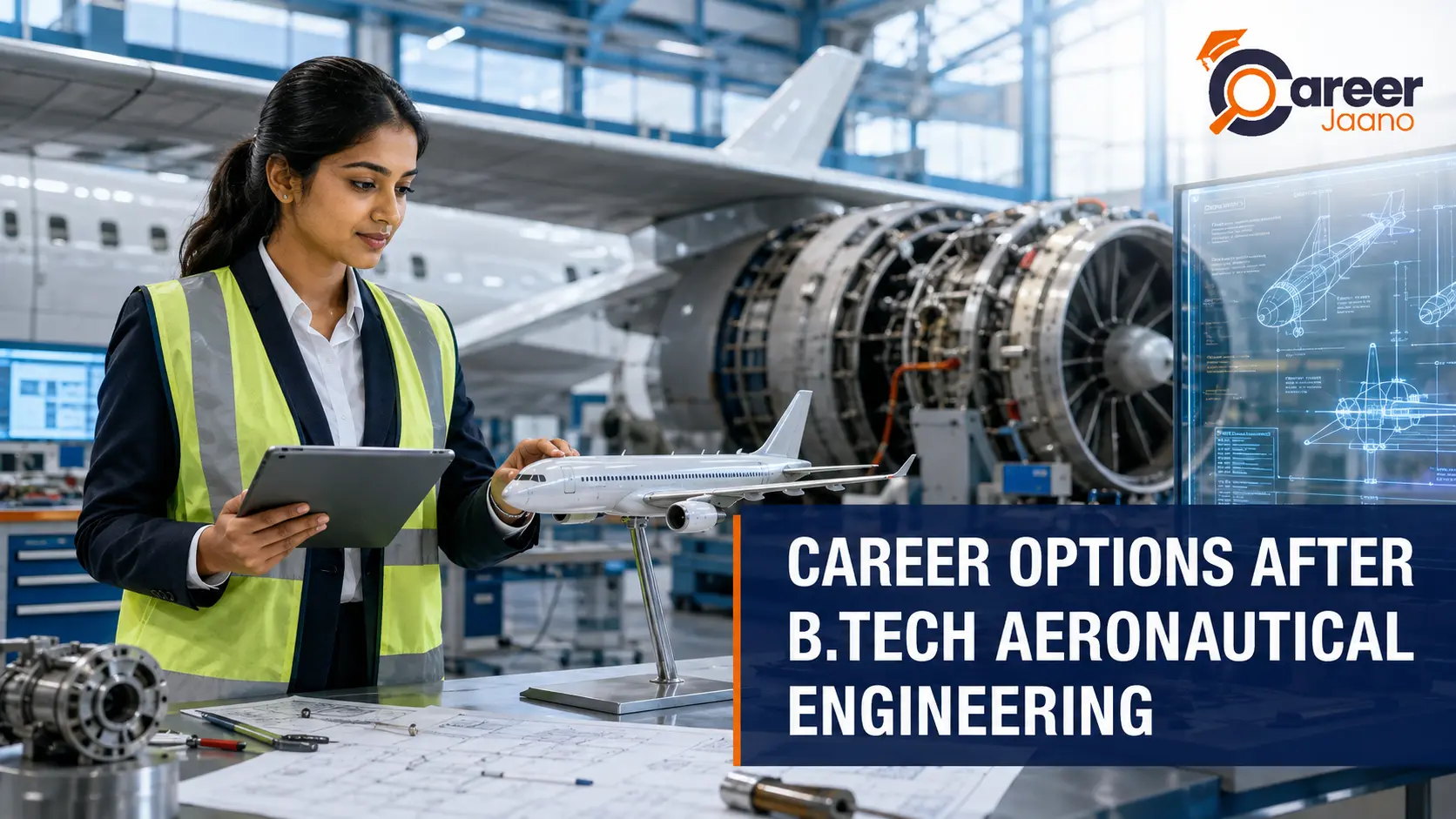
Aeronautical Engineering is an exciting career field for students who are interested in aircraft, helicopters, drones, rockets and space technology.
B.Tech in Aeronautical Engineering is a four-year undergraduate course. It teaches students how aircraft and aerospace systems are designed, developed, tested and maintained.
What Do Students Learn in Aeronautical Engineering?
During this course, students study many important subjects, such as:
Aerodynamics
Aircraft Structures
Propulsion Systems
Flight Mechanics
Avionics
Gas Turbine Engines
Computational Fluid Dynamics (CFD)
Aircraft Maintenance
Control Systems
Thermodynamics
Space Technology
These subjects have practical use in the aviation and aerospace industries.
Aerodynamics helps us understand how an aircraft moves through the air. Propulsion systems explain how aircraft engines produce power. Avionics deals with the navigation, communication and electronic systems used in an aircraft.
Aircraft structures and flight mechanics are important for the safety, balance and performance of an aircraft.
Specialisations in Aeronautical Engineering
Students can choose a specialisation according to their interests and career goals.
Popular specialisations include:
Aircraft Design and Structure
Avionics Systems
Propulsion and Engine Technology
Drone and UAV Technology
Space and Rocket Technology
Flight Testing and Maintenance
Computational Fluid Dynamics
Defence and Missile Technology
Aircraft Manufacturing
Air Transport and Aviation Management
These specialisations are used in aircraft manufacturing, defence research, space missions, airline operations, drone development and aircraft testing.
Important Skills for Aeronautical Engineers
A degree alone is not enough to build a successful career. Students also need technical skills and practical experience.
Important industry skills include:
Knowledge of design software such as CATIA, AutoCAD and SolidWorks
Understanding of CFD and simulation tools
Knowledge of aircraft systems and avionics
Problem-solving skills
Analytical thinking
Research and innovation skills
Teamwork and leadership
Project management
Understanding of safety rules and quality standards
Experience through internships, live projects or industrial training
Basic knowledge of drones and modern aviation technology
Students who gain practical experience during their course usually have better career opportunities.
Career Options in the Private Sector
Aeronautical Engineering graduates can work in aviation companies, aircraft manufacturing companies, drone companies, technology firms and private defence organisations.
1. Aircraft Design and Manufacturing
Students interested in aircraft design and production can work in the following roles:
Aircraft Design Engineer
Aircraft Structure Engineer
CAD or CAE Engineer
Production Engineer
Quality Control Engineer
Testing Engineer
These professionals help design, manufacture and test aircraft and their components.
2. Avionics and Electronics
Modern aircraft depend heavily on electronic and navigation systems.
Career options in this field include:
Avionics Engineer
Navigation System Engineer
Control System Engineer
Embedded System Developer
3. Propulsion and Aircraft Maintenance
Students interested in aircraft engines and maintenance can explore roles such as:
Engine Testing Engineer
Gas Turbine Specialist
Maintenance Planning Engineer
Technical Support Engineer
Aircraft Maintenance Support Professional
Please note that a B.Tech degree in Aeronautical Engineering does not automatically make a student a licensed Aircraft Maintenance Engineer. Separate approved training, examinations and licences may be required for licensed AME roles.
4. Drone and Defence Technology
The drone industry is growing in areas such as agriculture, mapping, delivery, photography, security and defence.
Students can work as:
Drone Design Engineer
UAV Operations Specialist
Drone Testing Engineer
Defence Research Associate
Missile Technology Engineer
5. Research and Analysis
Students who enjoy research, testing and technical problem-solving can choose roles such as:
CFD Analyst
Research Engineer
Simulation Engineer
Flight Testing Assistant
Aerospace Research Associate
Career Opportunities in Startups
Aeronautical Engineering graduates can also work with aviation, defence and drone startups.
Possible roles include:
Technical Consultant
Project Engineer
Operations and Safety Coordinator
Technical Sales Engineer
Technical Support Engineer
Drone Business Owner
Students with technical knowledge and business skills can also start their own drone or aviation-related company.
Salary in the Private Sector
The salary of an Aeronautical Engineer depends on the company, job role, location, skills and experience.
An approximate salary range can be:
Freshers: ₹4 lakh to ₹8 lakh per year
Professionals with 5–10 years of experience: ₹10 lakh to ₹28 lakh per year
Professionals working on international aviation or specialised defence projects may earn more. These figures are only estimates, and actual salaries can be different.
Government Career Options
Aeronautical Engineering graduates can also apply for jobs in government aviation, defence, research and technical organisations.
1. Defence and Research Organisations
Students may explore opportunities in organisations such as:
Defence Research and Development Organisation (DRDO)
Indian Space Research Organisation (ISRO)
Hindustan Aeronautics Limited (HAL)
National Aerospace Laboratories (NAL)
Bharat Electronics Limited (BEL)
Possible roles include Scientist, Engineer, Technical Officer and Research Associate.
Recruitment rules and eligible engineering branches can be different for every vacancy. Students should always check the official notification before applying.
2. Indian Air Force and Defence Services
Graduates may apply for technical roles in the Indian Air Force through examinations and recruitment processes such as AFCAT, subject to the official eligibility rules.
Possible opportunities include:
Aeronautical Engineer
Technical Branch Officer
Engineering Officer
Defence Research Professional
3. Public Sector and Aviation Organisations
Students can explore suitable technical vacancies in organisations such as:
Airports Authority of India (AAI)
Hindustan Aeronautics Limited (HAL)
Bharat Electronics Limited (BEL)
Other public-sector engineering organisations
4. Other Government Technical Jobs
Depending on the eligibility rules of a particular recruitment, graduates may also apply for:
Railway technical jobs
Engineering-based government posts
Technical assistant positions
Other central and state government vacancies
Eligibility may be different for examinations such as SSC JE and railway recruitment. Always check whether Aeronautical Engineering is accepted for the specific post.
5. Teaching and Training
Students interested in education can work as:
Technical Trainer
Laboratory Instructor
Polytechnic Lecturer
Engineering College Faculty Member
A postgraduate degree may be required for some teaching positions.
Salary in the Government Sector
Government salaries depend on the department, job position, pay level and allowances.
An approximate salary range can be:
Freshers: ₹5 lakh to ₹9 lakh per year
Experienced or senior professionals: ₹12 lakh to ₹25 lakh per year
Government employees may also receive allowances and other benefits according to the organisation’s rules.
Higher Study Options
Higher education can help students gain specialised knowledge and improve their career opportunities.
After completing B.Tech in Aeronautical Engineering, students can choose:
M.Tech in Aerospace Engineering
M.Tech in Avionics
M.Tech in Propulsion Systems
MS in Aerospace or Space Technology
Postgraduate Course in Drone Technology and UAV Systems
MBA in Aviation Management
PhD in Aeronautical or Aerospace Engineering
Data Science and Simulation Programmes
Defence and Space Research Fellowships
Students interested in licensed aircraft maintenance work should check approved AME training and licensing requirements separately.
Conclusion
B.Tech in Aeronautical Engineering can lead to exciting careers in aviation, aircraft manufacturing, drones, defence, research and space technology.
However, success in this field requires more than a degree. Students should develop technical skills, learn industry software, complete internships and work on practical projects.
With the right specialisation, practical experience and clear career planning, students can build a successful career in private companies, government organisations, defence services, research institutions and global aerospace companies.
Before choosing any course or career, students should speak with a qualified career counsellor. For more career-related information and guidance, visit Career Jaano