
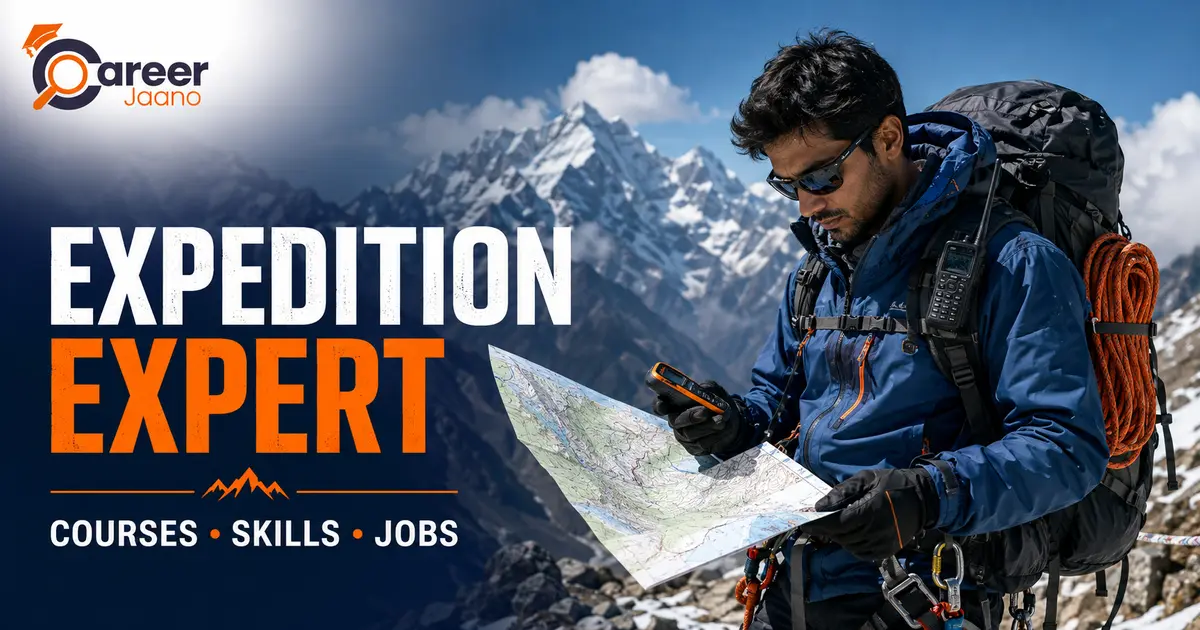
If you enjoy adventure, outdoor travel, teamwork and challenging environments, a career as an Expedition Expert may interest you.
An Expedition Expert plans and manages adventure journeys such as trekking, mountaineering, wildlife exploration, rafting and other outdoor expeditions. The role involves much more than travelling to exciting places. It requires careful planning, physical fitness, technical training, risk assessment and the ability to lead people safely.
This career can provide opportunities in adventure tourism, outdoor education, environmental projects, research and media. However, it is a physically demanding and potentially dangerous profession. Employment may also be seasonal or project-based, especially at the beginning.
Who Is an Expedition Expert?
An Expedition Expert is a trained professional who helps plan, organise and lead adventure or exploration activities.
Depending on their training, they may work on:
Trekking expeditions
Mountaineering trips
Wildlife expeditions
River-rafting programmes
Diving expeditions
Research journeys
Environmental field projects
Outdoor education camps
Documentary and film projects
Survival and leadership programmes
An Expedition Expert must understand the destination, weather, terrain, equipment, participant abilities and possible risks.
The professional may also coordinate permits, transportation, accommodation, emergency communication and local support.
What Does an Expedition Expert Do?
The responsibilities of an Expedition Expert depend on the type and location of the journey.
Common responsibilities include:
Researching the destination
Designing a safe itinerary
Checking weather and terrain conditions
Studying local laws and permit requirements
Assessing participant fitness and experience
Selecting suitable equipment
Preparing safety and emergency plans
Coordinating transportation and accommodation
Working with local guides and support teams
Briefing participants
Monitoring health and weather during the journey
Making decisions during emergencies
Protecting the natural environment
Preparing reports after the expedition
No expedition can be made completely risk-free. A professional’s responsibility is to identify foreseeable risks, follow accepted safety standards and avoid unnecessary danger.
Types of Expedition Careers
1. Trekking and Mountaineering
These professionals lead or support journeys in mountain regions. They may work as trekking guides, expedition coordinators, climbing instructors or outdoor leaders.
Technical mountaineering roles require recognised practical training and substantial field experience.
2. River and Water Expeditions
Professionals in this area may work in rafting, kayaking, sailing or other water-based activities.
They require activity-specific training, rescue skills and knowledge of water conditions.
3. Diving Expeditions
Diving professionals may support recreational, scientific, environmental or underwater-documentation projects.
Recognised diving qualifications, medical fitness and activity-specific experience are generally required.
4. Wildlife and Jungle Expeditions
These expeditions may involve wildlife observation, conservation, photography or research.
Professionals need knowledge of:
Wildlife behaviour
Local regulations
Environmental ethics
First aid
Navigation
Emergency procedures
Wildlife activities should always follow legal requirements and avoid disturbing animals or damaging their habitats.
5. Scientific and Research Expeditions
Research organisations and universities may organise expeditions for environmental, geological, biological or climate-related studies.
These roles may require a relevant academic qualification in addition to field skills.
6. Media and Documentary Expeditions
Film crews, photographers and content-production teams may require expedition coordinators to manage location access, safety, local logistics and outdoor operations.
7. Outdoor Education
Schools, colleges, camps and training organisations may hire professionals to conduct:
Adventure camps
Leadership programmes
Nature education
Team-building activities
Basic outdoor-skills training
Education Required to Become an Expedition Expert
There is no single compulsory degree for every expedition career. Educational requirements depend on the type of expedition and job.
Useful areas of study include:
Geography
Environmental Science
Wildlife Science
Forestry
Tourism Management
Adventure Tourism
Physical Education
Geology
Disaster Management
Travel and Hospitality
Sports Science
A relevant bachelor’s degree can be useful for research, conservation, tourism-management or specialised organisational roles.
For technical field positions, practical training and experience are often as important as academic qualifications.
Professional Training and Certifications
Students should select training according to the activity in which they want to specialise.
Useful training may include:
Basic and advanced mountaineering
Trekking leadership
Wilderness first aid
CPR and first aid
Search and rescue
Navigation
Rope and climbing techniques
River rescue
Rafting instruction
Diving
Paragliding
Avalanche awareness
Outdoor leadership
Disaster management
One short course cannot qualify a person to lead every type of adventure activity. Mountaineering, rafting, diving and paragliding require different skills, experience and certification systems.
Training Organisations to Explore
Depending on the chosen specialisation, students may explore recognised training offered by organisations such as:
Nehru Institute of Mountaineering
Himalayan Mountaineering Institute
Indian Mountaineering Foundation
Other recognised mountaineering and outdoor-training institutes
Approved first-aid and CPR training providers
Recognised diving-training organisations
Recognised rafting and river-rescue organisations
State tourism and adventure-training institutes
Training availability, fees, duration, age limits, medical requirements and certification conditions can change.
Students must check the latest information on the official website of the relevant institution. They should also confirm whether a certificate is recognised by the employer, activity regulator or destination authority.
Course Duration and Fees
Course duration and fees depend on the activity and training level.
A short introductory programme may last a few days, while advanced mountaineering, rescue or instructor-level programmes may require several weeks, previous qualifications and substantial field experience.
Costs may include:
Course fees
Travel
Accommodation
Equipment
Medical examination
Insurance
Permit charges
Assessment fees
Online courses may help students learn theory, but practical outdoor, rescue and technical skills must be learned through supervised, in-person training.
Physical and Medical Fitness
Expedition work can involve:
Long hours of walking
Carrying equipment
High altitude
Heat or cold
Limited sleep
Difficult terrain
Unpredictable weather
Emergency situations
Professionals should develop fitness gradually through appropriate training.
Useful areas of fitness include:
Cardiovascular endurance
Strength
Flexibility
Balance
Mobility
Recovery
Mental resilience
People with medical conditions should consult an appropriate healthcare professional before beginning demanding training or high-altitude activities.
Important Skills for an Expedition Expert
1. Planning and Organisation
Expedition Experts must coordinate routes, schedules, equipment, permits, transport, food, accommodation and emergency support.
2. Leadership
A leader must remain calm and make responsible decisions, particularly when weather or participant health changes.
Good leadership does not mean taking unnecessary risks. It includes knowing when to change the route or cancel an activity.
3. Communication
Professionals must communicate clearly with participants, local guides, rescue teams, government authorities and support staff.
4. Navigation
Useful navigation skills include:
Map reading
Compass use
GPS use
Route planning
Terrain interpretation
Backup navigation methods
Electronic devices can fail, so professionals should not depend entirely on a phone or GPS device.
5. First Aid
First-aid training is essential for outdoor work. Depending on the role, professionals may need wilderness first aid, CPR or activity-specific emergency training.
First-aid certification does not replace professional medical care. Emergency evacuation should be arranged whenever required.
6. Risk Assessment
Professionals must understand and manage risks related to:
Weather
Altitude
Terrain
Water conditions
Wildlife
Equipment
Participant health
Transport
Communication failure
7. Survival and Outdoor Skills
Depending on the environment, useful skills may include:
Shelter management
Water safety
Food planning
Weather awareness
Campcraft
Fire safety
Waste management
Emergency signalling
8. Environmental Responsibility
Expedition professionals should follow responsible outdoor practices, including:
Avoiding litter
Respecting wildlife
Following local rules
Protecting water sources
Reducing damage to trails
Respecting local communities
9. Teamwork
Expeditions involve guides, porters, drivers, instructors, medical support, researchers and participants. Effective teamwork is essential for safety and success.
How to Gain Practical Experience
Begin with Supervised Activities
Join beginner-level treks or outdoor programmes led by trained professionals.
Complete Relevant Training
Choose recognised training that matches your preferred activity.
Volunteer
Volunteering with suitable environmental, adventure or community programmes may help you gain experience and build professional connections.
Do not perform technical or rescue duties without the required training and supervision.
Work as an Assistant
Starting as a trainee, camp assistant or guide assistant can help you understand real field responsibilities.
Keep an Experience Record
Maintain a record of:
Routes completed
Training received
Roles performed
Weather conditions
Leadership responsibilities
First-aid experience
Supervisor references
Never exaggerate expedition experience or certifications.
Build Skills Gradually
Do not attempt advanced expeditions only to improve your portfolio. Technical difficulty and responsibility should increase only with proper training and supervised experience.
Career Opportunities
Expedition professionals may work in:
Adventure-tourism companies
Trekking organisations
Outdoor education centres
Mountaineering institutes
Wildlife and conservation organisations
Research projects
Schools and universities
Film and documentary productions
Travel companies
Camps and resorts
Government tourism projects
Nonprofit organisations
Dedicated “Expedition Expert” vacancies may be limited. Similar work may be advertised under different job titles.
Popular Job Profiles
Possible job roles include:
Adventure Tour Guide
Trek Leader
Expedition Coordinator
Expedition Planner
Outdoor Instructor
Adventure Sports Instructor
Camp Manager
Mountain Guide
Field Operations Coordinator
Outdoor Education Instructor
Safety Coordinator
Rescue Support Professional
Conservation Field Assistant
Research Expedition Assistant
Wildlife Expedition Coordinator
Adventure Travel Consultant
Freelance Expedition Planner
Each job has different qualification, certification and experience requirements.
Freelancing and Entrepreneurship
Experienced professionals may work independently as:
Expedition planners
Adventure-tour consultants
Outdoor trainers
Trek leaders
Safety advisers
Logistics coordinators
Content creators
Documentary support professionals
Starting an adventure-tourism business may require:
Business registration
Local permissions
Qualified staff
Insurance
Participant waivers
Emergency procedures
Equipment inspections
Environmental compliance
Activity-specific licences or approvals
Requirements vary by state, destination and type of activity.
Organisations and Employers to Explore
Depending on available vacancies and eligibility, professionals may explore opportunities with:
Adventure-tourism companies
Trekking organisations
Mountaineering foundations
Outdoor education providers
Conservation organisations
Research institutions
Media-production companies
Travel agencies
Government tourism departments
Disaster-management organisations
Well-known organisations may be active in adventure, conservation or research, but this does not mean they always recruit Expedition Experts.
Candidates should check official career pages and verified job listings rather than relying on general lists of company names.
Salary and Income
Salary depends on the job role, activity, location, season, employer, qualifications and field experience.
Approximate salary ranges for related roles in India may be:
Entry-level or assistant roles: ₹2.5 lakh to ₹5 lakh per year
Experienced guides and coordinators: ₹5 lakh to ₹10 lakh per year
Specialised or senior professionals: ₹10 lakh to ₹18 lakh or more per year
Freelancers may charge per day, trip or project. Their income may vary significantly throughout the year.
These figures are approximate and should not be treated as guaranteed salaries. Adventure work may be seasonal, and professionals may need multiple sources of income.
Advantages of This Career
Opportunities to work outdoors
Exposure to different places and cultures
Development of leadership skills
Work in tourism, education and conservation
Possibility of freelance work
Opportunities for continuous learning
A career linked with personal interests
Challenges of This Career
Physical risk
Difficult weather
Seasonal employment
Irregular working hours
Time away from family
Medical and fitness requirements
Responsibility for participant safety
Unpredictable income
Continuing training expenses
Legal and insurance requirements
Students should understand these challenges before choosing the field.
How to Stay Updated
Expedition professionals should continue learning about:
Equipment
Weather systems
Rescue methods
Communication technology
Environmental changes
Government regulations
Safety standards
First-aid practices
Sustainable tourism
They can attend workshops, refresher programmes and professional seminars relevant to their field.
Frequently Asked Questions
1. What does an Expedition Expert do?
An Expedition Expert plans and supports outdoor journeys. They manage routes, logistics, equipment, safety, participants and emergency procedures.
2. Is a degree compulsory for becoming an Expedition Expert?
A specific degree is not compulsory for every role. However, degrees in geography, tourism, environmental science, wildlife science or related subjects can be useful.
3. Which course is best for an Expedition Expert?
The right course depends on the chosen activity. Mountaineering, rafting, diving and outdoor leadership require different training and certifications.
4. Is mountaineering training compulsory?
It is necessary for technical mountaineering roles. A person should not lead mountaineering activities without suitable training and experience.
5. Can I become an Expedition Expert after Class 12?
Yes, you can begin relevant training after Class 12, subject to the course’s age, education, fitness and medical requirements. Professional leadership requires time and practical experience.
6. Is this a high-paying career?
Some specialised professionals may earn well, but income is not guaranteed. Salary depends on qualifications, experience, employer, season and type of activity.
7. Is Expedition Expert a dangerous career?
Outdoor expeditions can involve serious risks. Proper training, preparation, equipment and responsible decision-making are essential.
8. What skills are required for this career?
Important skills include planning, leadership, navigation, first aid, risk assessment, communication, fitness and environmental responsibility.
9. Can an Expedition Expert work as a freelancer?
Yes. Experienced professionals may work as freelance guides, planners, trainers or consultants after meeting applicable training, legal and insurance requirements.
10. How can I get my first job?
Complete relevant training, gain supervised experience, assist qualified professionals, volunteer with suitable organisations and build a truthful record of your field experience.
Conclusion
A career as an Expedition Expert can be exciting for people who enjoy adventure, leadership and outdoor environments.
However, it should not be chosen only for travel or income. The profession involves physical effort, ongoing training, risk management and responsibility for other people’s safety.
Begin with recognised training, gain experience under qualified professionals and develop your skills gradually. Never lead an activity for which you are not properly trained.
Before choosing this career, consider your fitness, interests and long-term goals. You may also consult a qualified career counsellor and visitCareer Jaano for additional career guidance.