
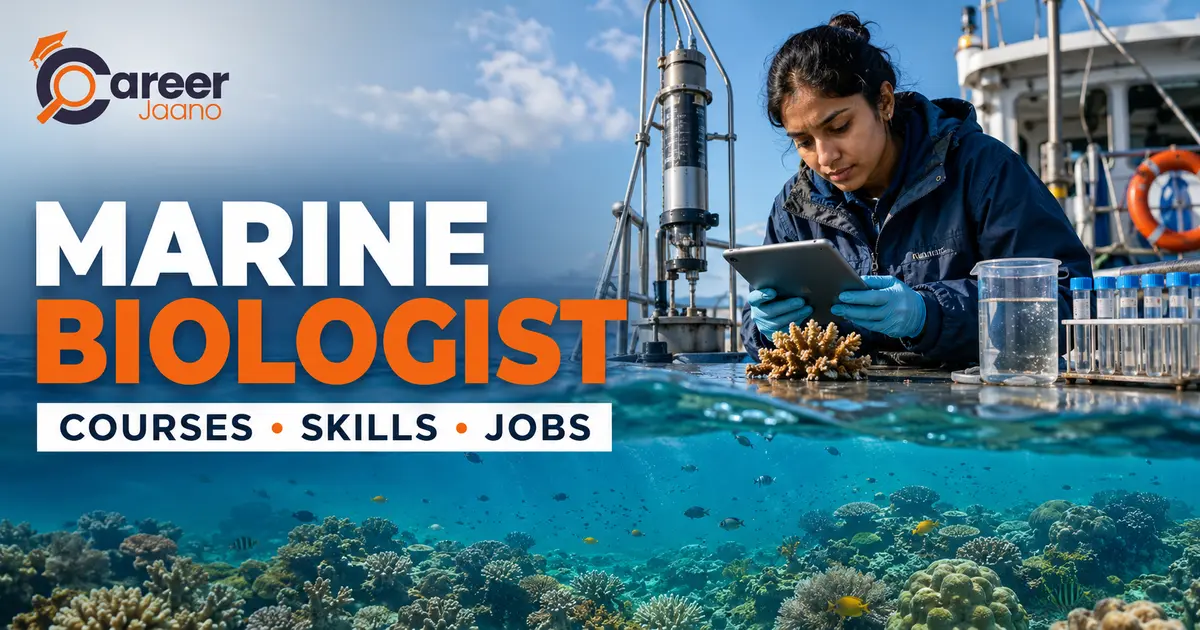
If you are interested in oceans, marine animals and environmental conservation, a career as a Marine Biologist may be a suitable choice.
Marine Biology is not limited to working with dolphins or diving near coral reefs. It involves scientific research, laboratory work, data analysis, field surveys, conservation and the study of complex marine ecosystems.
The career can be exciting, but it may also involve long working hours, difficult field conditions, remote locations and highly competitive research positions.
What Is Marine Biology?
Marine Biology is the scientific study of organisms that live in oceans, seas and coastal environments.
The field examines:
Marine plants
Fish
Coral reefs
Marine mammals
Shellfish
Plankton
Microorganisms
Coastal habitats
Deep-sea ecosystems
Relationships between marine organisms and their environment
Marine biologists also study how pollution, fishing, coastal development and climate change affect marine life.
Who Is a Marine Biologist?
A Marine Biologist is a scientist or trained professional who studies marine organisms and ecosystems.
Depending on their specialisation, Marine Biologists may:
Study marine animals and plants
Collect water, soil or biological samples
Monitor coral reefs
Study the effect of pollution
Analyse marine data
Conduct laboratory experiments
Support conservation projects
Study fisheries and aquatic resources
Prepare environmental-impact reports
Develop marine-management recommendations
Write research papers
Educate communities about ocean conservation
Not every Marine Biologist works underwater. Many professionals spend a large part of their time in laboratories, offices, classrooms or data-analysis environments.
Marine Biologist vs Oceanographer
Marine Biology and Oceanography are related but different fields.
Marine Biologist
A Marine Biologist primarily studies living organisms and their relationships with marine environments.
Oceanographer
An Oceanographer studies the ocean itself, including its physical, chemical, geological or biological processes.
Some professionals work across both areas, particularly in research projects.
Major Areas of Marine Biology
1. Marine Ecology
Marine ecologists study how organisms interact with each other and their environment.
They may research food chains, biodiversity, habitats and environmental changes.
2. Marine Conservation
Marine conservation professionals work to protect:
Coral reefs
Mangroves
Sea turtles
Marine mammals
Coastal habitats
Endangered species
Marine biodiversity
They may work in research, policy, community education or protected-area management.
3. Fisheries Biology
Fisheries biologists study fish populations, breeding, aquatic habitats and the sustainable use of fisheries resources.
4. Marine Microbiology
Marine microbiologists study bacteria, viruses, algae and other microorganisms found in marine environments.
This work may contribute to ecology, biotechnology and environmental research.
5. Marine Biotechnology
Marine biotechnology studies how marine organisms or biological processes may be used in areas such as:
Medicine
Food
Industrial materials
Environmental management
Biological research
Advanced laboratory qualifications are generally required for this field.
6. Coral-Reef Biology
Coral-reef biologists study reef ecosystems, coral health, bleaching, biodiversity and conservation.
7. Marine Mammal Science
Professionals in this area study whales, dolphins and other marine mammals.
Dedicated positions can be highly competitive and may require postgraduate research experience.
8. Aquaculture
Aquaculture involves the controlled breeding and production of fish, shellfish and aquatic plants.
Marine Biology graduates may work in research, environmental monitoring, farm management or aquatic-health support according to their qualifications.
Education Required to Become a Marine Biologist
Step 1: Complete Class 12
Students should generally study science subjects in Class 12.
Biology is particularly useful and may be compulsory for certain undergraduate programmes. Eligibility requirements vary between institutions.
Step 2: Complete a Bachelor’s Degree
Relevant undergraduate options include:
B.Sc. Marine Biology
B.Sc. Zoology
B.Sc. Biology
B.Sc. Environmental Science
B.Sc. Fisheries Science
B.Sc. Aquaculture
B.Sc. Life Sciences
B.Sc. Biotechnology
Students should select a recognised programme that provides laboratory work, field exposure and a strong science foundation.
Step 3: Pursue a Master’s Degree
A postgraduate degree may be required for specialised research, consulting and advanced scientific roles.
Suitable programmes may include:
M.Sc. Marine Biology
M.Sc. Oceanography
M.Sc. Marine Science
M.Sc. Aquatic Biology
M.Sc. Zoology
M.Sc. Fisheries Science
M.Sc. Environmental Science
M.Sc. Marine Ecology
M.Sc. Coastal and Marine Management
Eligibility differs between universities. A particular bachelor’s subject may be required.
Step 4: Consider a PhD
A PhD may be necessary for:
Independent research
University teaching
Senior scientific roles
Research leadership
Specialised academic careers
PhD programmes generally require strong academic performance, research ability and a suitable research proposal.
Practical Training and Experience
Practical experience is important for building a career in Marine Biology.
Students can gain experience through:
Internships
University research projects
Coastal field surveys
Laboratory work
Conservation programmes
Fisheries projects
Environmental organisations
Aquariums
Research institutes
Wildlife organisations
Citizen-science projects
Field activities should be completed under qualified supervision and with all required permissions.
Certifications and Additional Training
A specific professional licence is not required for every Marine Biology job. However, certain additional qualifications may be useful.
Options may include:
Scientific diving or recognised scuba training
First aid and CPR
GIS and remote sensing
Environmental Impact Assessment
Research ethics
Boat safety
Statistical analysis
Laboratory safety
Wildlife-handling training
A recreational scuba certificate alone does not qualify someone to conduct scientific diving or handle marine animals.
Diving is also not compulsory for every Marine Biology career.
Institutions and Research Organisations to Explore
Students may explore relevant programmes or research opportunities at recognised universities, fisheries institutions and marine-research organisations.
Examples of organisations to research include:
Universities offering Marine Biology, Marine Science, Oceanography or Fisheries programmes
Central and state universities in coastal regions
Fisheries universities
CSIR–National Institute of Oceanography
National Centre for Coastal Research
National Centre for Polar and Ocean Research
ICAR fisheries-research institutions
Wildlife and marine-conservation organisations
Research institutions may not always offer regular degree programmes. Some primarily provide internships, research projects, fellowships or employment.
Course names and availability can change. Students must verify eligibility, curriculum, recognition, fees and admissions on the institution’s official website.
Important Skills for a Marine Biologist
1. Scientific Research
Marine Biologists should know how to:
Develop research questions
Collect samples
Record observations
Conduct experiments
Analyse results
Prepare scientific reports
2. Fieldwork
Fieldwork may involve:
Coastal surveys
Boat travel
Sample collection
Wildlife observation
Difficult weather
Early or irregular working hours
Professionals must follow safety, ethical and legal requirements.
3. Laboratory Skills
Useful laboratory skills may include:
Microscopy
Water-quality testing
Sample preservation
Species identification
Molecular techniques
Safe equipment handling
The required skills depend on the research area.
4. Data Analysis
Modern Marine Biology uses a large amount of data.
Useful tools may include:
Microsoft Excel
R
Python
MATLAB
Statistical software
Data-visualisation tools
5. GIS and Remote Sensing
Geographic Information Systems and remote sensing can help professionals study:
Marine habitats
Coastal changes
Species distribution
Pollution
Coral reefs
Fishing activity
6. Environmental Knowledge
Marine Biologists need an understanding of ecology, biodiversity, climate change, pollution and conservation.
7. Communication
Professionals must communicate research through:
Reports
Scientific papers
Presentations
Community programmes
Policy recommendations
8. Teamwork
Marine projects may involve biologists, oceanographers, fisheries experts, divers, boat crews, engineers, government departments and local communities.
9. Adaptability
Field conditions can change because of tides, weather, equipment failure or access restrictions.
10. Ethical Responsibility
Marine research must respect animal welfare, environmental laws, protected areas and community rights.
Career Options in the Private Sector
Marine Biology graduates may find opportunities in:
Environmental consultancies
Aquaculture companies
Fisheries businesses
Marine biotechnology
Coastal-development projects
Environmental testing laboratories
Marine tourism
Aquariums
Conservation organisations
Data and mapping companies
Educational organisations
Possible job roles include:
Marine Biology Research Assistant
Marine Ecologist
Environmental Consultant
Coastal Survey Assistant
Fisheries Research Assistant
Aquaculture Executive
Marine Conservation Officer
Laboratory Analyst
Environmental Impact Assessment Assistant
GIS Analyst
Marine Data Analyst
Aquarium Education Officer
Field Project Coordinator
Some positions require a master’s degree, technical certification or previous field experience.
Government-Sector Career Options
Government opportunities may be available in marine research, fisheries, environmental management and coastal conservation.
Relevant organisations and departments may include:
Marine and ocean-research institutions
Fisheries departments
Environment departments
Coastal-zone management authorities
Biodiversity boards
Universities
Government research laboratories
Wildlife and protected-area programmes
ICAR and CSIR institutions
Possible roles may include:
Research Assistant
Project Associate
Junior Research Fellow
Technical Assistant
Fisheries Officer
Laboratory Assistant
Marine Conservation Project Assistant
Environmental Scientist
Scientific Officer
GIS or Data Analyst
A Marine Biology degree does not automatically make a candidate eligible for every scientific or administrative position. Eligibility depends on the official recruitment notification.
Indian Forest Service and other civil-service roles follow separate competitive examinations and eligibility requirements.
Career in Research and Academics
Students interested in research may work on topics such as:
Coral bleaching
Marine pollution
Microplastics
Fisheries management
Mangrove conservation
Marine mammals
Ocean acidification
Climate change
Coastal ecosystems
Marine biotechnology
Deep-sea biodiversity
Senior research and university-teaching positions may require a postgraduate degree, NET, PhD, publications or other qualifications specified by the institution.
Freelancing and Consulting
Experienced professionals may work independently in areas such as:
Environmental surveys
Marine-data analysis
GIS mapping
Scientific writing
Conservation education
Research support
Documentary consultation
Environmental Impact Assessment
Freelancers must follow applicable laws, permits and professional standards. Wildlife handling, sample collection and protected-area research may require official permission.
Salary of a Marine Biologist in India
Salary varies according to qualifications, role, location, employer, specialisation and experience.
Approximate annual salary ranges may be:
Entry-level roles: ₹3 lakh to ₹6 lakh per year
Experienced professionals: ₹6 lakh to ₹12 lakh per year
Senior or specialised professionals: ₹12 lakh to ₹20 lakh or more per year
Research fellowships and project-based positions may follow fixed institutional rates rather than private-sector salary structures.
Very high salaries are not standard for all Marine Biologists. These figures are approximate and should not be treated as guaranteed income.
Future Scope of Marine Biology
Marine ecosystems are affected by climate change, pollution, overfishing, habitat loss and coastal development.
This creates a need for trained professionals in:
Marine conservation
Fisheries management
Coastal planning
Climate research
Aquaculture
Environmental monitoring
Marine biotechnology
Data analysis
Ocean policy
Public education
Career growth may require postgraduate education, technical skills and research experience.
Challenges of This Career
Students should understand the challenges before choosing Marine Biology:
Limited entry-level vacancies
Competitive research positions
Remote field locations
Project-based employment
Irregular working hours
Physically demanding fieldwork
Need for postgraduate education
Exposure to difficult weather
Continuing training requirements
Strict research and wildlife regulations
The career should be selected because of genuine interest in science and marine ecosystems, not only because it appears adventurous.
How to Build a Successful Career
Develop a strong foundation in biology and ecology.
Select a recognised degree programme.
Learn statistics and data analysis.
Gain laboratory and field experience.
Complete relevant internships.
Learn GIS or remote sensing.
Build research and scientific-writing skills.
Work under qualified supervision.
Follow research ethics and environmental laws.
Consider postgraduate education for specialised roles.
Frequently Asked Questions
1. What does a Marine Biologist do?
A Marine Biologist studies organisms living in oceans and coastal environments. They may conduct research, collect samples, analyse data or work in conservation.
2. Which degree is best for becoming a Marine Biologist?
A bachelor’s degree in Marine Biology, Zoology, Biology, Environmental Science, Fisheries Science or a related subject can provide a suitable foundation.
3. Is NEET required for Marine Biology?
NEET is generally not required for regular B.Sc. Marine Biology programmes. Admission requirements vary, so students should check the university’s official criteria.
4. Is scuba diving compulsory for Marine Biologists?
No. Many Marine Biologists work in laboratories, data analysis, policy or conservation. Diving is useful only for certain field roles.
5. Can I become a Marine Biologist after a B.Sc. in Zoology?
Yes. Depending on university eligibility, a B.Sc. Zoology graduate may pursue an M.Sc. in Marine Biology or a related field.
6. Are government jobs available in Marine Biology?
Yes, related opportunities may be available in research institutions, fisheries departments, universities and environmental organisations. Eligibility differs for each vacancy.
7. What is the salary of a Marine Biologist in India?
Entry-level professionals may earn approximately ₹3 lakh to ₹6 lakh per year. Salary depends on qualifications, job role, employer and experience.
8. Is Marine Biology a good career in India?
It can be a rewarding career for students interested in science, oceans and conservation. However, specialised positions can be competitive and may require postgraduate education.
9. Can Marine Biologists work abroad?
Yes. Opportunities may be available in research, conservation, aquaculture and environmental consulting. Candidates must meet the academic, visa and professional requirements of the destination country.
10. Does Marine Biology involve working only with marine animals?
No. The field also includes marine plants, microorganisms, ecosystems, environmental data, pollution, fisheries and coastal management.
Conclusion
Marine Biology is an important scientific field that helps us understand and protect oceans, marine organisms and coastal ecosystems.
It offers opportunities in research, conservation, fisheries, aquaculture, environmental consulting and education. However, success requires scientific knowledge, practical experience, data skills and, for many specialised roles, postgraduate education.
Before choosing this career, understand the difference between the adventurous image of Marine Biology and its real scientific responsibilities.
You may also consult a qualified career counsellor and visit Career Jaano for additional career guidance.