
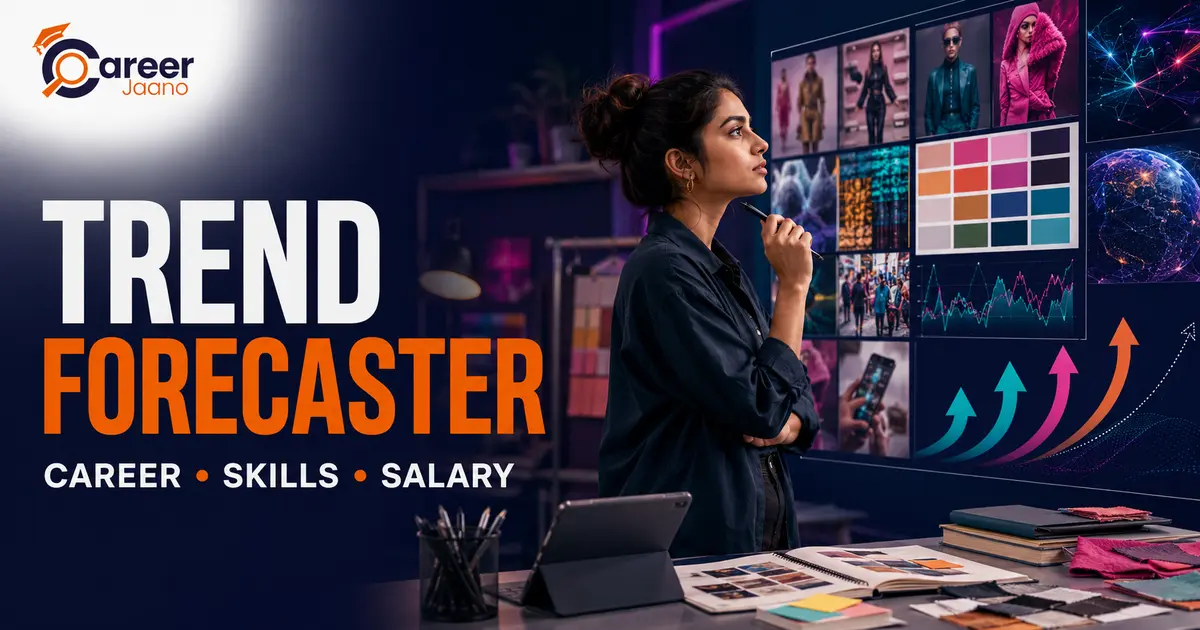
If you enjoy observing changes in fashion, technology, business and society, a career as a Trend Forecaster may be a good choice.
Trend forecasters study consumer behaviour, market data and cultural changes to identify trends that may become important in the future. Their research helps companies understand what customers may want in the coming months or years.
Trend forecasting is used in fashion, beauty, technology, marketing, retail, entertainment and lifestyle industries. It combines research, data analysis, creativity and an understanding of human behaviour.
What Is Trend Forecasting?
Trend forecasting is the process of identifying patterns and predicting how they may develop in the future.
A trend can be related to:
Fashion styles
Colours and materials
Consumer preferences
Technology
Digital behaviour
Beauty and wellness
Social values
Entertainment
Retail and shopping habits
Business models
Trend forecasters do not simply guess what may become popular. They collect information from different sources, study patterns and explain why a particular change may become important.
No forecast is guaranteed to be correct. The goal is to provide businesses with useful evidence and possible future scenarios.
What Does a Trend Forecaster Do?
A Trend Forecaster studies changes in markets, culture and consumer behaviour. The exact responsibilities depend on the industry.
Common responsibilities include:
Researching consumer behaviour
Tracking cultural and social changes
Studying market reports
Analysing sales and search data
Monitoring social media conversations
Observing new products and technologies
Attending exhibitions and industry events
Interviewing consumers and industry experts
Creating mood boards and visual reports
Preparing trend presentations
Identifying short-term and long-term trends
Advising product, marketing and design teams
Reviewing earlier forecasts and their results
A forecaster must explain not only what may change but also why the change matters to the client or organisation.
Types of Trends
Trends can be studied over different periods.
Micro Trends
Micro trends develop quickly and may remain popular for a short period. Social-media aesthetics, viral products and short-lived fashion styles are common examples.
Macro Trends
Macro trends usually develop over several years and influence consumer behaviour, industries and society. Examples may include sustainability, digital payments, remote work and personalised services.
Megatrends
Megatrends are large, long-term changes that can affect countries and industries for many years. Population changes, urbanisation, climate concerns and major technological developments can be examples.
A professional forecaster should understand the difference between a short-lived fad and a meaningful long-term change.
Major Areas of Trend Forecasting
1. Fashion Trend Forecasting
Fashion forecasters study upcoming:
Clothing styles
Colours
Fabrics
Materials
Patterns
Accessories
Consumer preferences
Their research may support fashion designers, manufacturers, retailers and merchandising teams.
2. Business and Marketing Forecasting
Business and marketing forecasters study changing customer expectations, purchasing behaviour and market opportunities.
They may help companies plan:
New products
Advertising campaigns
Customer experiences
Pricing strategies
Brand positioning
Market expansion
3. Technology Trend Forecasting
Technology forecasters study emerging technologies and how they may affect people, companies and industries.
Areas may include:
Artificial intelligence
Automation
Digital platforms
Cybersecurity
Cloud computing
Virtual experiences
Consumer electronics
Financial technology
4. Cultural and Social Trend Forecasting
These professionals study how values, lifestyles, attitudes and social behaviour are changing.
Their research may examine:
Work habits
Family structures
Entertainment choices
Environmental concerns
Identity and self-expression
Health and wellbeing
Online communities
5. Beauty and Lifestyle Forecasting
Beauty and lifestyle forecasters study changes in:
Skincare
Makeup
Personal care
Fitness
Wellness
Food habits
Home décor
Travel preferences
6. Consumer and Retail Forecasting
Retail forecasters use customer and sales data to understand which products, experiences and services may attract consumers.
They may study:
Shopping behaviour
Product demand
Online and offline retail
Pricing
Store experience
Customer loyalty
Seasonal demand
Education Required to Become a Trend Forecaster
There is no single compulsory degree for becoming a Trend Forecaster. People enter this field from fashion, business, design, media, data and social-science backgrounds.
Relevant subjects include:
Fashion Design
Fashion Communication
Fashion Merchandising
Marketing
Business Management
Economics
Media and Communication
Sociology
Psychology
Statistics
Data Analytics
Consumer Behaviour
Cultural Studies
Design Research
Students should choose a course according to the industry in which they want to work.
For example, fashion design or fashion communication may be useful for fashion forecasting. Marketing, consumer behaviour or business analytics may be more relevant for commercial forecasting.
Institutions and Learning Options
Students can explore relevant programmes at recognised universities, fashion institutes, design schools and management institutions.
Institutions in India that may offer related education in fashion, design, management, statistics, media or social sciences include:
National Institute of Fashion Technology
Pearl Academy
Indian Institutes of Management
University of Delhi
Jamia Millia Islamia
Indian Statistical Institute
Tata Institute of Social Sciences
Other recognised design and business institutions
These institutions may not necessarily offer a degree titled “Trend Forecasting.” Students should look for programmes in related areas and verify the latest course name, eligibility, fees and curriculum on the official website before applying.
Short-term courses in fashion forecasting, consumer insights, market research, data analytics and digital marketing may also be useful. However, students should check the recognition and practical value of a course before paying a high fee.
Important Skills for a Trend Forecaster
1. Research Skills
Trend forecasting begins with research. A forecaster should know how to collect information from reliable sources and compare different types of evidence.
Useful research methods include:
Surveys
Interviews
Observation
Social listening
Market research
Competitor analysis
Desk research
Consumer studies
2. Understanding Consumer Behaviour
A forecaster should understand why people buy certain products, adopt new habits or reject existing ideas.
Knowledge of psychology, sociology and consumer behaviour can help explain these changes.
3. Data Analysis
Data can help determine whether an observed behaviour is a real trend or only a small temporary event.
Useful tools may include:
Microsoft Excel
Google Sheets
Data-visualisation platforms
Web analytics tools
Social-media analytics
Python or R for advanced analysis
Programming is not compulsory for every forecasting role, but data literacy is valuable.
4. Creative Thinking
Forecasters must connect information from different sources and imagine how a trend may develop in the future.
Creativity helps them build original and useful interpretations instead of simply repeating popular opinions.
5. Critical Thinking
A Trend Forecaster should question assumptions and look for evidence. A viral social-media post does not automatically represent a major market trend.
Critical thinking helps identify:
Weak evidence
Misleading data
Temporary fads
Personal bias
Exaggerated claims
6. Digital and Social-Media Knowledge
Online platforms can show how conversations, aesthetics and consumer interests are changing.
Forecasters should understand:
Social listening
Search behaviour
Online communities
Influencer culture
Digital marketing
Platform-specific trends
Social media should be used as one source of information, not as the only source.
7. Visual Communication
Trend reports often include photographs, colours, charts, mood boards and visual themes.
Basic design and presentation skills can help forecasters communicate their ideas clearly.
8. Communication and Presentation
A forecast is useful only when decision-makers can understand it.
Forecasters must be able to:
Write clear reports
Explain research
Present findings
Defend recommendations
Adjust communication for different audiences
Tools Used by Trend Forecasters
The tools used depend on the industry and role. Common options may include:
Microsoft Excel
Google Sheets
PowerPoint
Canva
Adobe Creative Cloud
Google Trends
Social-listening platforms
Web analytics tools
Survey platforms
Data-visualisation tools
Fashion and consumer-insight databases
Python or R for advanced analysis
Professionals may also use paid trend-research and forecasting platforms. Access to these tools often depends on the employer.
Career Opportunities in Trend Forecasting
Trend forecasting is not always advertised under the exact job title “Trend Forecaster.” Related opportunities may appear under different titles.
Possible roles include:
Trend Forecaster
Fashion Forecaster
Consumer Insights Analyst
Market Research Analyst
Cultural Insights Researcher
Foresight Analyst
Innovation Researcher
Brand Strategist
Consumer Behaviour Analyst
Retail Analyst
Trend Researcher
Strategic Foresight Consultant
Design Researcher
Coolhunter
Future Research Analyst
Students should search for related job titles instead of limiting themselves to one term.
Industries Hiring Trend-Forecasting Professionals
Fashion and Retail
Fashion houses, apparel companies, textile businesses and retailers use trend research for product planning, merchandising and marketing.
Market Research and Consulting
Research and consulting firms study consumer behaviour, industries and market opportunities for clients.
Technology and Innovation
Technology companies may hire researchers, strategists and foresight professionals to understand emerging technologies and user needs.
Advertising and Branding
Advertising, branding and digital agencies use trend insights to create campaigns and develop brand strategies.
Beauty and Lifestyle
Beauty, wellness, home, food and lifestyle brands use forecasting to plan products and understand changing customer expectations.
Media and Entertainment
Media companies may study audience interests, content formats, cultural movements and entertainment preferences.
Government and Policy Research
Government departments, research bodies and policy organisations may require professionals for market analysis, consumer research, economic studies or strategic planning.
Such vacancies may not use the title “Trend Forecaster.” Eligibility and selection depend on the official recruitment notification.
Companies and Organisations to Explore
Depending on their qualifications and available vacancies, trend-research professionals may explore opportunities in:
Fashion and retail companies
Market-research organisations
Consulting firms
Advertising agencies
Technology companies
Consumer brands
Research institutions
Government policy organisations
Large brands and consulting firms may use trend research, but this does not mean they always recruit for a dedicated Trend Forecaster position. Students should check the organisation’s official careers page for current openings.
Freelancing and Independent Consulting
Experienced professionals may work independently and provide services such as:
Consumer-trend reports
Fashion-trend reports
Cultural research
Market analysis
Brand strategy
Product insights
Social-media trend analysis
Workshops and presentations
Freelancers need a strong portfolio, professional network and clear understanding of the client’s industry.
Income can vary widely depending on expertise, project complexity and client budget.
How to Build a Trend-Forecasting Portfolio
A portfolio should show how you research, analyse and communicate trends.
A trend-forecasting project may include:
The topic or industry
Research question
Data sources
Consumer observations
Supporting evidence
Weak signals identified
Short-term and long-term implications
Visual mood board
Forecast scenarios
Recommendations for a brand or organisation
Sample portfolio topics may include:
The future of sustainable fashion
Changing food habits among young consumers
The future of digital payments
Beauty trends among Indian consumers
AI-powered shopping experiences
The future of hybrid work
Wellness trends in urban India
Changing travel preferences
Clearly mention the sources and date of research in each project.
Step-by-Step Path to Become a Trend Forecaster
Step 1: Select an Industry
Choose whether you are most interested in fashion, technology, marketing, culture, beauty, retail or another field.
Step 2: Develop Research Skills
Learn consumer research, market analysis, interviewing, surveys and observation.
Step 3: Understand Data
Learn Excel and basic statistics. Advanced learners may also explore data-visualisation tools, Python or R.
Step 4: Follow Reliable Sources
Study industry reports, market data, research papers, company reports and consumer studies.
Do not depend only on social-media content.
Step 5: Build Portfolio Projects
Create detailed forecasting projects based on real evidence and clearly explain your reasoning.
Step 6: Improve Presentation Skills
Learn how to create professional reports, mood boards, charts and presentations.
Step 7: Complete Internships
Look for internships in market research, fashion merchandising, consumer insights, branding, advertising or business analysis.
Step 8: Apply for Related Roles
Search for Trend Researcher, Consumer Insights Analyst, Market Research Analyst, Brand Strategist and Foresight Analyst roles.
Salary of a Trend Forecaster in India
Trend forecasting is a specialised field, and salaries vary according to the role, industry, location, employer and experience.
An approximate annual salary range may be:
Entry-level roles: ₹4 lakh to ₹8 lakh per year
Mid-level roles: ₹9 lakh to ₹20 lakh per year
Senior or specialist roles: ₹20 lakh to ₹36 lakh or more per year
Dedicated forecasting roles may offer different salaries from related positions in market research, fashion, consulting or consumer insights.
Freelance income depends on the project, experience, client and scope of work. These figures are approximate and should not be considered guaranteed salaries.
Future Scope of Trend Forecasting
Companies need to understand changing customer expectations and prepare for future opportunities. This creates demand for professionals who can combine research, data, creativity and strategic thinking.
Potential growth areas include:
Consumer insights
Strategic foresight
Artificial intelligence
Sustainable products
Digital behaviour
Fashion and beauty
Retail innovation
Future-of-work research
Cultural analysis
Brand strategy
However, trend forecasting will continue to change as artificial intelligence and data tools become more widely used.
Professionals who can interpret data, understand culture and provide useful business recommendations may have stronger career opportunities.
Challenges in Trend Forecasting
Students should also understand the limitations of this career:
Forecasts can be incorrect.
Consumer behaviour can change suddenly.
Reliable data may be expensive or difficult to access.
Personal bias can affect interpretation.
Social-media popularity can be mistaken for a long-term trend.
Dedicated Trend Forecaster jobs may be limited.
Clients may expect certainty even when only possible scenarios can be provided.
A responsible forecaster clearly explains the evidence, assumptions and limitations behind each prediction.
Frequently Asked Questions
1. What does a Trend Forecaster do?
A Trend Forecaster studies consumer behaviour, market data, social changes and cultural patterns to identify trends that may become important in the future.
2. Is a specific degree required to become a Trend Forecaster?
No single degree is compulsory. Relevant fields include fashion, marketing, business, economics, sociology, psychology, media, design, statistics and data analytics.
3. Is Trend Forecasting only related to fashion?
No. Trend forecasting is also used in technology, marketing, beauty, retail, business, entertainment and cultural research.
4. What skills are required for Trend Forecasting?
Important skills include research, consumer analysis, data interpretation, creative thinking, critical thinking, visual communication and presentation.
5. Does Trend Forecasting require coding?
Coding is not compulsory for every role. However, knowledge of Excel, analytics and data visualisation is useful. Python or R may help in data-focused positions.
6. How can I become a Fashion Trend Forecaster?
Study fashion, textiles, communication or merchandising, learn fashion research methods, follow industry developments and build a strong forecasting portfolio.
7. What is the salary of a Trend Forecaster in India?
Entry-level professionals in forecasting or related research roles may earn approximately ₹4 lakh to ₹8 lakh per year. Salary varies according to industry, skills, role and experience.
8. Can a Trend Forecaster work as a freelancer?
Yes. Experienced professionals may provide independent research, reports, workshops and consulting services to brands and agencies.
9. What is the difference between a trend and a fad?
A fad usually becomes popular quickly and lasts for a short time. A trend develops more steadily and may influence consumer behaviour for a longer period.
10. How can I build a portfolio without work experience?
Create independent research projects on real consumer, fashion, technology or cultural trends. Use reliable sources and clearly explain your observations, evidence and recommendations.
Conclusion
Trend Forecasting is a creative and research-driven career that combines consumer behaviour, data, culture and business strategy.
It may suit people who enjoy observing change, asking questions and explaining what those changes could mean for organisations and consumers.
Success requires more than predicting what may become popular. A good Trend Forecaster must conduct reliable research, understand data, think critically and communicate useful insights.
Before choosing this career, consider your interests, skills and preferred industry. You may also consult a qualified career counsellor and visit Career Jaano for additional career guidance.