
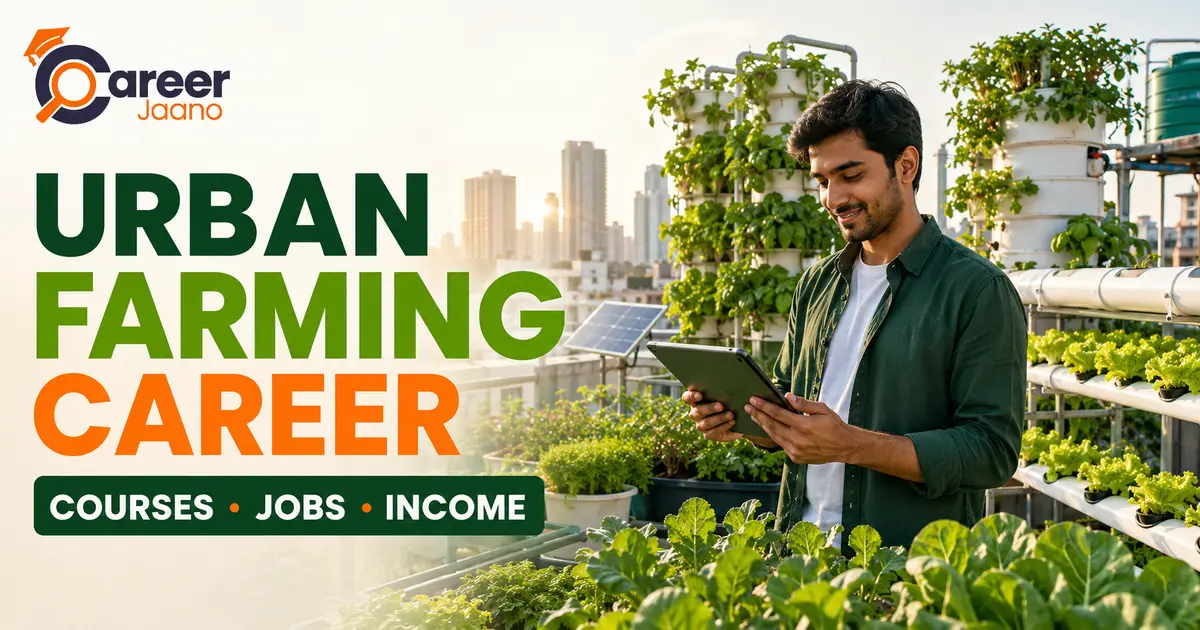
As cities continue to grow, agricultural land is being converted into residential and commercial spaces. At the same time, urban residents are becoming more interested in fresh, locally grown and environmentally responsible food.
These changes have created opportunities in Urban Farming, also known as Urban Agriculture.
Urban farming involves growing vegetables, fruits, herbs and other crops within cities or nearby suburban areas. It can be practised on rooftops, balconies, terraces, vacant plots, indoor spaces and community gardens.
This field may suit people who are interested in agriculture, sustainability, technology and entrepreneurship. However, urban farming is not a guaranteed low-investment or high-income business. Its success depends on planning, technical knowledge, location, crop selection, operating costs and access to customers.
What Is Urban Farming?
Urban farming is the production of food and agricultural products in cities and nearby areas.
Unlike traditional farming, which is generally practised on large areas of rural land, urban farming uses smaller and more limited spaces.
Common urban-farming locations include:
Rooftops
Balconies
Terraces
Community gardens
Vacant urban plots
Indoor farms
Greenhouses
Warehouses
School and institutional campuses
Urban farmers may grow:
Leafy vegetables
Herbs
Microgreens
Fruits
Flowers
Mushrooms
Medicinal plants
Seedlings
Hydroponic crops
Some urban projects may also include beekeeping, poultry, fish farming or composting. These activities must follow local health, safety and municipal regulations.
Who Is an Urban Farmer?
An Urban Farmer is a person who grows, manages or sells agricultural products in an urban or suburban environment.
An Urban Farmer may:
Grow vegetables and herbs
Manage a rooftop farm
Operate a hydroponic unit
Produce microgreens
Develop community gardens
Sell fresh produce locally
Provide urban-farming consultancy
Design irrigation systems
Conduct farming workshops
Create compost from organic waste
Work with restaurants and retailers
Manage an agricultural startup
Urban farming can be a full-time career, part-time business, community initiative or specialised job within an agriculture or sustainability company.
Popular Methods of Urban Farming
1. Rooftop Farming
Rooftop farming involves growing crops on the roofs of houses, offices, schools, hotels or commercial buildings.
Before starting, it is important to check:
Structural safety
Waterproofing
Drainage
Sunlight
Water availability
Building and local rules
Professional advice may be necessary before placing heavy soil beds or water tanks on a rooftop.
2. Balcony and Terrace Gardening
Balconies and terraces can be used to grow vegetables, herbs and small fruit plants in containers.
This method is suitable for beginners because it can be started on a small scale.
3. Vertical Farming
Vertical farming uses stacked growing layers, wall-mounted systems or vertical structures to grow more plants in a limited area.
It may use soil, cocopeat, hydroponics or other growing media.
Commercial vertical farming can require significant investment in structures, lighting, climate control and electricity.
4. Hydroponics
Hydroponics is a method of growing plants without conventional soil. The roots receive water containing carefully balanced nutrients.
Hydroponic systems may reduce water use in certain controlled conditions, but they require:
Water-quality management
Nutrient monitoring
Pumps and equipment
Electricity
Regular maintenance
Technical knowledge
A failure in the water, pump or nutrient system can damage crops quickly.
5. Aquaponics
Aquaponics combines fish farming with hydroponic plant production. Waste produced by fish provides nutrients for plants, while plants help clean the water.
It can be productive but requires careful management of:
Fish health
Water quality
Temperature
Oxygen
Nutrient balance
System maintenance
Beginners should receive proper training before starting a commercial aquaponics unit.
6. Indoor Farming
Indoor farms use controlled lighting, temperature, water and nutrients to grow crops inside a building.
This method provides greater control over growing conditions but may have high equipment and energy costs.
7. Community Gardening
A community garden is managed by a group of residents, schools, nonprofit organisations or local communities.
These gardens may support:
Local food production
Environmental education
Community participation
Composting
Green spaces
Skill development
Benefits of Urban Farming
Better Use of Limited Space
Urban farming makes it possible to grow food in places that may otherwise remain unused, such as rooftops, balconies and vacant plots.
Local Food Production
Food grown close to consumers may require less transportation and may reach customers more quickly.
However, local production alone does not automatically make food safer or healthier. Safe cultivation, clean water, proper handling and responsible use of inputs are essential.
Greener Urban Spaces
Plants can improve the appearance of urban areas and may contribute to biodiversity and local cooling.
Efficient Resource Management
Well-designed urban farms may use techniques such as drip irrigation, rainwater collection, composting and controlled nutrient management.
The actual environmental benefit depends on how the system is built and operated.
Community Participation
Community farms can help residents learn about food production, waste management and environmental responsibility.
Entrepreneurship Opportunities
Urban farming can support businesses involving fresh produce, seedlings, compost, hydroponic systems, farm setup and training.
Challenges of Urban Farming
Urban farming also has important limitations and risks.
Common challenges include:
High land or rental costs
Limited sunlight
Water availability
Electricity expenses
Equipment maintenance
Pest and disease management
Structural safety of rooftops
Local permissions
Crop losses
Market competition
Limited storage
Delivery costs
Difficulty maintaining consistent quality
Lack of skilled workers
A commercial project should begin only after studying costs, customers and operational risks.
Education Required for Urban Farming
A formal agriculture degree can be useful but is not compulsory for every small urban-farming project.
Students interested in professional, technical or research roles may consider courses such as:
B.Sc. Agriculture
B.Sc. Horticulture
B.Sc. Forestry
Agricultural Engineering
Agricultural Technology
Food Technology
Environmental Science
Agribusiness Management
Diploma in Horticulture
Certificate courses in Hydroponics
Certificate courses in Organic Farming
Training in Protected Cultivation
Science subjects in Class 12 may be required for some undergraduate agriculture programmes. Eligibility differs between courses and institutions.
Students should check the official admission requirements before applying.
Training and Learning Options in India
Students can explore agriculture-related training, workshops and programmes offered by suitable government institutions, agricultural universities and extension centres.
Institutions and organisations to explore may include:
Indian Agricultural Research Institute
National Institute of Agricultural Extension Management
ICAR institutes
State agricultural universities
Krishi Vigyan Kendras
Central Institute of Agricultural Engineering
Central Institute of Post-Harvest Engineering and Technology
Horticulture-related government institutions
State agriculture and horticulture departments
These institutions may not always offer a programme specifically titled “Urban Farming.” Course availability, eligibility, duration and fees can change.
Students should check the official website or contact the institution directly for current information.
Private organisations and online platforms also offer courses in:
Hydroponics
Vertical farming
Aquaponics
Organic farming
Terrace gardening
Microgreen production
Mushroom cultivation
Farm business management
Before paying for a private course, check the trainer’s experience, practical facilities, course content and independent reviews.
Important Skills for an Urban Farmer
Crop Knowledge
Urban farmers should understand:
Crop selection
Plant nutrition
Sowing and harvesting
Pest management
Seasonal conditions
Soil or growing media
Crop rotation
Water and Nutrient Management
Water quality and nutrient balance are especially important in hydroponic and controlled-farming systems.
Technical Skills
Depending on the farming method, useful technical skills may include:
Drip irrigation
Hydroponic systems
Pumps and filters
Sensors
Climate-control equipment
Basic electrical safety
Equipment maintenance
Business Planning
A commercial Urban Farmer should understand:
Production costs
Pricing
Cash flow
Customer demand
Marketing
Delivery
Inventory
Profit margins
Problem-Solving
Crops can be affected by weather, pests, equipment failure, water problems and nutrient imbalance. Farmers must identify problems quickly and respond correctly.
Communication and Marketing
Urban farmers may need to explain the value of their products to households, restaurants, retailers and community groups.
Food Safety
Clean water, hygienic harvesting, storage and responsible input use are essential when growing food for sale.
How to Start Urban Farming on a Small Scale
Step 1: Select a Suitable Space
Begin with a balcony, terrace, rooftop or small plot that receives enough sunlight and has safe access to water.
If you plan to use a rooftop, check structural safety and waterproofing.
Step 2: Study Local Demand
Before growing crops commercially, find out what nearby customers actually want.
Possible customers include:
Households
Restaurants
Cafés
Grocery shops
Housing societies
Farmers’ markets
Online customers
Step 3: Choose Suitable Crops
Beginners may start with crops that match the available space, climate and customer demand.
Options may include:
Herbs
Leafy vegetables
Microgreens
Tomatoes
Chillies
Seasonal vegetables
Seedlings
Do not select crops only because they are popular online.
Step 4: Prepare a Budget
Include:
Containers or growing structures
Seeds and seedlings
Soil or growing medium
Nutrients
Water
Electricity
Labour
Packaging
Transport
Equipment maintenance
Crop losses
Step 5: Start with a Pilot Project
Test the method on a small scale before investing in a large system.
Record:
Crop growth
Water use
Electricity use
Production quantity
Cost per crop
Selling price
Crop losses
Customer feedback
Step 6: Develop a Sales Plan
Decide whether you will sell through subscriptions, local stores, restaurants, housing societies or direct delivery.
Step 7: Follow Local Rules
Check applicable municipal, building, food-safety, business-registration and environmental requirements.
Career Options in the Private Sector
Urban farming creates opportunities in agriculture, horticulture, sustainability, food technology and agricultural equipment.
Possible job roles include:
Urban Farm Assistant
Urban Farm Manager
Hydroponics Technician
Hydroponics Farm Supervisor
Horticulture Assistant
Crop Production Executive
Controlled Environment Agriculture Technician
Nursery Manager
Community Garden Coordinator
Agricultural Sales Executive
Farm Operations Coordinator
Irrigation Technician
Agribusiness Executive
Sustainability Project Assistant
Agriculture Content and Training Executive
Job titles and eligibility vary between companies.
Business Opportunities in Urban Farming
Fresh-Produce Business
Farmers can sell vegetables, herbs and microgreens directly to customers, stores or restaurants.
Hydroponic Farm Setup
Experienced professionals may help individuals, schools, hotels and businesses install hydroponic systems.
Urban-Farming Consultancy
Consultants may provide advice on:
Farm planning
Crop selection
System design
Cost estimation
Water management
Business planning
Consultancy requires practical experience. A short online certificate alone may not be enough.
Nursery and Seedling Business
An Urban Farmer may grow and sell vegetable seedlings, herbs, ornamental plants and gardening supplies.
Composting Business
Organic waste can be converted into compost when proper processes and local regulations are followed.
Training and Workshops
Professionals with real experience may conduct workshops on terrace gardening, hydroponics, composting or kitchen gardening.
Farm-to-Consumer Subscription
Farmers may deliver a regular basket of vegetables or herbs to local customers.
Subscription income depends on consistent quality, supply and customer service.
Government-Sector Opportunities
Dedicated government posts titled “Urban Farmer” may be uncommon. However, candidates with suitable qualifications may explore related positions and projects.
Agriculture and Horticulture Departments
Possible areas of work include:
Horticulture projects
Agricultural extension
Technical assistance
Protected cultivation
Community agriculture
Training projects
Municipal Bodies
Municipal corporations and local bodies may undertake projects involving:
Urban greening
Community gardens
Composting
Rooftop gardens
Waste management
Urban sustainability
Opportunities may be permanent, contractual or project-based.
Forest and Environment Departments
Suitable candidates may explore work related to:
Urban forestry
Plantation projects
Environmental education
Green-space development
Urban forestry is different from food-based urban farming, though some skills may overlap.
Research and Educational Institutions
Agriculture graduates may explore eligible roles in:
Agricultural research
Technical support
Farm management
Laboratory work
Training
Project coordination
Higher qualifications may be required for scientific or teaching roles.
Development Organisations
Government agencies, nonprofit organisations and development projects may hire professionals for community gardens, livelihood programmes, nutrition projects and sustainable agriculture.
Every position has separate eligibility and selection requirements. Candidates should rely on the official recruitment notification.
Income and Salary in Urban Farming
Income in urban farming varies greatly because the field includes employment, freelancing and business ownership.
An approximate salary range for related entry-level positions may be:
Entry-level jobs: ₹2.5 lakh to ₹5 lakh per year
Experienced technical or management roles: ₹6 lakh to ₹12 lakh or more per year
Business income depends on:
Farm size
Crop type
Production cost
Crop losses
Selling price
Customer demand
Rent
Electricity
Water
Labour
Packaging
Delivery expenses
Revenue is not the same as profit. A farm may achieve strong sales but still lose money if operating costs are high.
Income figures are approximate and should not be treated as guaranteed earnings.
How to Improve the Chances of Success
Urban farmers can improve their chances by:
Starting with a small pilot project
Selecting crops based on real demand
Recording every cost
Learning from experienced growers
Maintaining crop quality
Building direct customer relationships
Avoiding unnecessary equipment
Developing more than one source of income
Following hygiene and safety standards
Testing the business before taking a large loan
Frequently Asked Questions
1. What is Urban Farming?
Urban Farming is the growing of food and agricultural products within cities or nearby suburban areas. It may take place on rooftops, balconies, terraces, vacant plots or indoor farms.
2. Is an agriculture degree compulsory for Urban Farming?
No. A degree is not compulsory for every small urban-farming project. However, formal agriculture or horticulture education can be useful for technical, research and professional roles.
3. Can Urban Farming be started on a rooftop?
Yes, but structural safety, waterproofing, drainage, sunlight, water availability and building rules must be checked first.
4. Is hydroponic farming profitable?
Hydroponics can become commercially viable under suitable conditions, but profit is not guaranteed. Equipment, electricity, nutrients, crop losses and market demand must be considered.
5. Which crops are suitable for Urban Farming?
Herbs, leafy vegetables, microgreens, seedlings and selected seasonal vegetables may be suitable. The right crop depends on climate, space, growing method and customer demand.
6. How much investment is required to start Urban Farming?
Investment depends on the scale and method. A small container garden may require limited investment, while a commercial hydroponic or indoor farm may require substantial capital.
7. Can I get a government job in Urban Farming?
Dedicated Urban Farming posts may be uncommon. Suitable graduates may explore agriculture, horticulture, municipal, environmental and project-based vacancies according to official eligibility rules.
8. What skills are required for an Urban Farmer?
Important skills include crop management, irrigation, pest control, water and nutrient management, business planning, marketing and problem-solving.
9. Can Urban Farming be a full-time career?
Yes, but it should be treated as a professional farming or business activity. Success depends on technical knowledge, planning, customer demand and financial management.
10. Can I start Urban Farming without owning land?
Yes. Depending on local rules and availability, urban farming may be started on a balcony, terrace, rented rooftop, community garden or leased urban plot.
Conclusion
Urban Farming offers career and business opportunities for people interested in agriculture, sustainability, technology and local food production.
It can make productive use of small urban spaces and may support local communities. However, it is not automatically a low-cost or highly profitable business.
A successful Urban Farmer needs practical training, crop knowledge, financial planning, reliable customers and the ability to manage risks.
Start with a small pilot project, test the market and understand every cost before expanding. Before choosing Urban Farming as a career, consider your interests, resources and long-term goals.
You may also speak with a qualified career counsellor and visit Career Jaano for additional career guidance.